


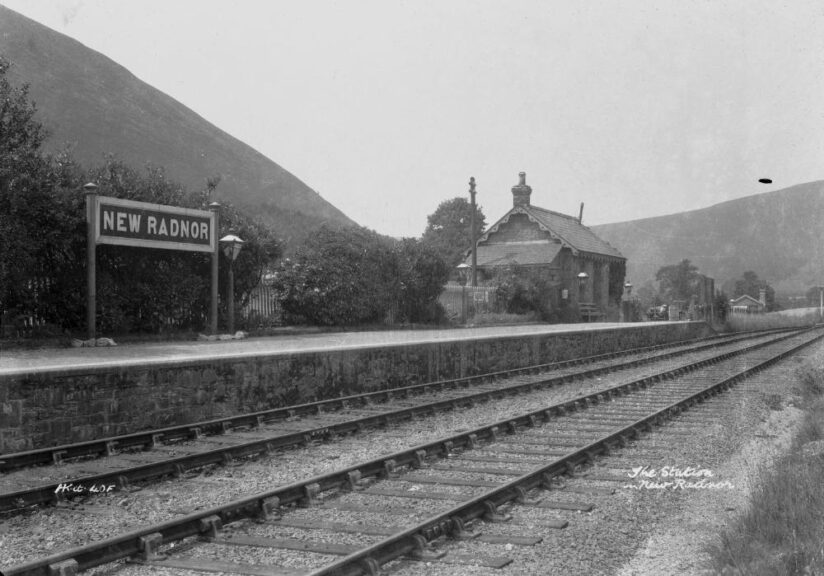
Presteigne Holiday Park is situated on the old railway station at New Radnor which was opened on 25th September 1875 and served the local community for many years as a goods and passenger service. The type of goods to be carried was milk for the Cadbury Factory, bales of straw for papermaking at Ross-on-Wye, potatoes for stock feeding, and occasionally cattle. The village shop had all its supplies delivered by train.
In 1923 representatives from the Great Western Railway looked at the possibility of extending the railway into Central Wales. The estimated cost was £1.75 million which the GWR concluded could not be justified and New Radnor became officially the ‘end of the line’
The Station Master was an important person in the village and until 1938 he occupied the house known as “Station House’ in Broad Street. After this time a porter/guard would travel from Kington and man the station during the day.
During the 2nd World War New Radnor became an extremely busy station handling timber for a nearby Forestry Commission camp. On one occasion during the war German bombers (returning from a raid in Liverpool) jettisoned a landmine that exploded on Smatcher Hill, causing the windows in the Station Building to be blown out.
There are many interesting stories told by local people who still remember the railway being open. One train driver would regularly stop his train along the line to lay rabbit wires. Others would bag a pheasant, bred nearby at Harpton Court, with a well-aimed lump of coal. One favourite outing for Kington folk would be to take a train to New Radnor and then head for the surrounding hills to pick whinberries for themselves or to sell.
In 1952, following cut-backs on the railways and the rise in other forms of transport, the Station finally closed. It became a caravan park in 1966. The old goods shed and station building are still standing and part of the platform has survived. The original loading crane is still situated in the goods shed and the booking office window and original fireplace can still be seen in the waiting room of the station building.
 Top
Top